
Spain is a top star in the world of olive oils. Its unique climate and terroir make its olive oils stand out. These factors shape the taste and quality of the olives. Exploring Spanish olive oils reveals how geography, weather, and farming create top-quality extra virgin olive oils.
Spain has many regions, each with its own olive oil taste. From the sunny Andalusia to the green hills of Catalonia, each place has its own unique olive oil. These factors like height, soil, and local climates add depth to the flavour and smell of Spanish olive oils.
Olive farming is a long tradition in Spain. Farmers have passed down their skills for generations. From the green groves of the Balearic Islands to the tough terraces of the Pyrenees, Spain’s lands produce many olive oil styles. Each one has its own special taste.
Understanding Spanish Olive Oil’s Superior Quality
Spain is famous for making some of the world’s best olive oils. These oils are known for their top quality and special tastes. The secret to this high quality is the country’s varied lands and the hard work of olive growers.
Geographical Influences on Flavour and Aroma
Spain has many places for growing olives, from sunny coasts to rough mountains. This variety of climates and soils gives each olive oil its own taste. For example, oils from Andalusia in the south often have a rich, fruity smell.
Those from Catalonia in the north are usually more full-bodied, with a peppery taste.
Cultivating Olives in Spain’s Diverse Terroirs
- Spanish olive growers take great care of their trees, picking the best olive types for their area.
- In the sunny Andalusia, growers like the Picual and Hojiblanca olives. These thrive in the warm weather and make oils that are bright green and have a strong, slightly spicy taste.
- In cooler, mountainous Catalonia, the Arbequina and Manzanilla olives are chosen for their light, fruity flavours and smooth texture.
The hard work and knowledge of Spanish olive growers, along with the country’s varied landscapes, make Spanish olive oils truly special. They are a treat for the senses.
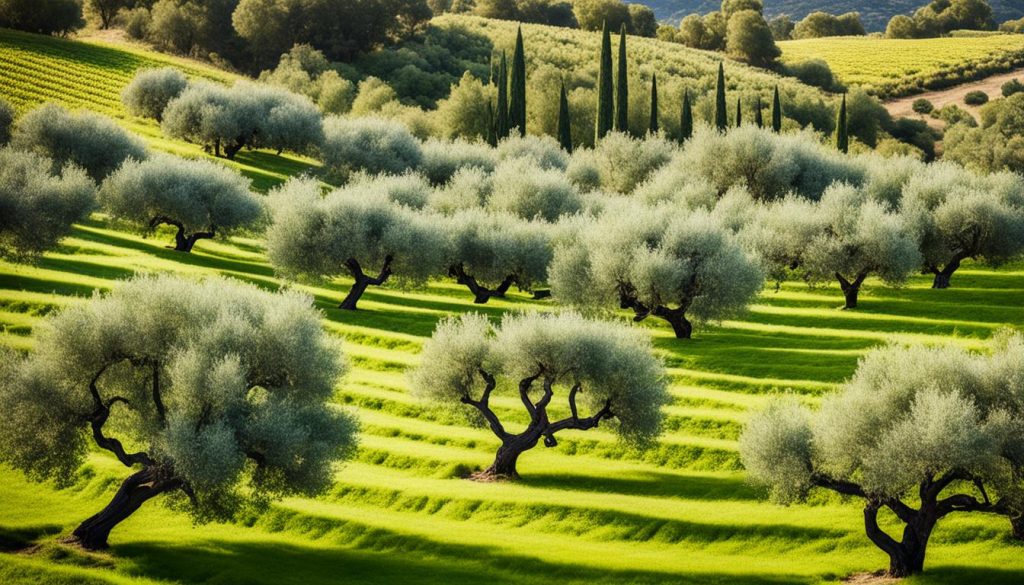
Spanish Olive Oil Quality: Climate’s Crucial Role
Spain’s climate is key to the quality of its olive oil. The country’s Mediterranean climate is warm and sunny during the day. It cools down at night, perfect for growing olives.
This climate makes the olive trees grow well. The cool nights give the olives a rich taste. The drop in temperature at night is what makes the olive oil special.
Spain’s main olive-growing areas get just the right amount of rain and have low humidity. This keeps the olives healthy and free from diseases.
This leads to many types of Spanish olive oil, each with its own taste. You can find everything from the spicy Picual to the sweet Arbequina. These oils are loved by olive oil fans all over the world.
Knowing how Spain’s climate helps make great olive oil shows the effort put into these oils. Whether you’re looking into the health benefits of olive oil or just enjoying its taste, the climate’s impact is clear.
Explore the Nuanced Flavours of Spanish Olive Oil
Step into the world of Spanish olive oil. Here, the land and careful growing create a mix of tastes. You’ll find everything from grassy and peppery to sweet and fruity notes. This variety is truly amazing.
Tasting Notes: From Grassy to Fruity
Discover the deep tastes of Spanish olive oil. Artisans in Spain grow olives with many flavours. These oils are perfect for those who love fine tastes.
- Grassy and Peppery: Some olive oils have a fresh, herb smell and a spicy taste. This shows the area’s climate and the strong olive trees.
- Fruity and Buttery: Other oils are sweet, like fresh apples or ripe olives, with a smooth feel.
- Floral and Nutty: Some oils have a sweet smell and a nutty taste. This shows the skill of the makers in bringing out these tastes.
Trying different Spanish olive oils is an exciting food journey. You learn about the land and how the oil is made. This makes these oils special.
| Flavour Profile | Tasting Notes | Olive Varietals |
|---|---|---|
| Grassy and Peppery | Vibrant herbaceous aroma, peppery finish | Picual, Arbequina, Hojiblanca |
| Fruity and Buttery | Delicate balance of fruit notes, smooth mouthfeel | Arbequina, Manzanilla, Cornicabra |
| Floral and Nutty | Delicate floral aromas, subtle nutty undertone | Picual, Empeltre, Manzanilla |
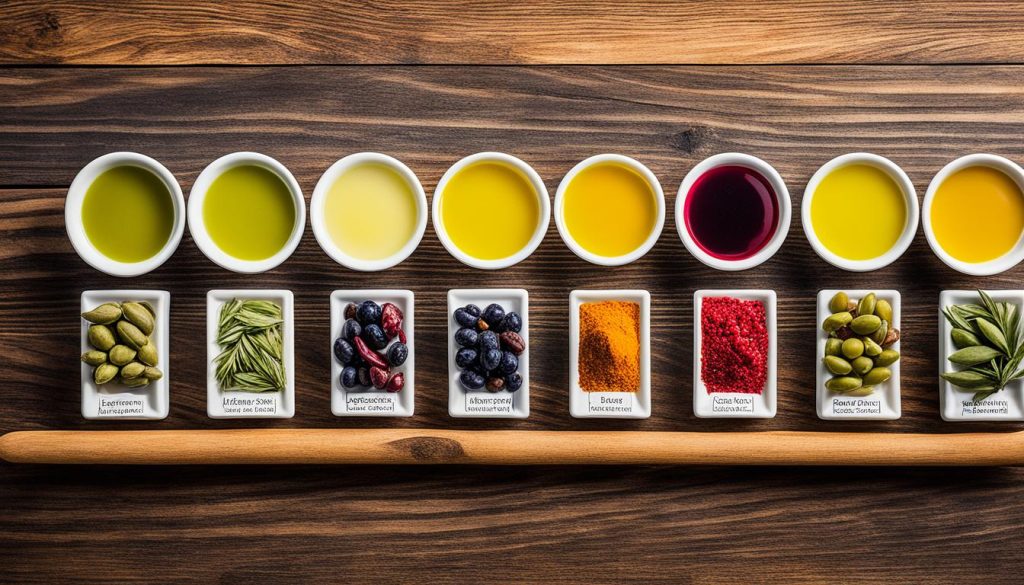
Spanish Olive Oil Quality: Production Methods Matter
Spanish olive oil is known for its top quality. This is thanks to the special ways it is made. Traditional and modern methods both have their own effects on the taste, smell, and health benefits.
Traditional vs. Modern Olive Oil Processing
In Spain, many small producers keep up old ways of making olive oil. These methods bring out unique tastes and smells. They often make extra virgin olive oils with a grassy, peppery, or fruity taste. This shows the special place where the olives grow.
On the other hand, new technology has changed how olive oil is made. This makes the oil taste more consistent but might lose some of its unique taste. Yet, these new ways help keep the oil’s acidity low and save important compounds. This makes sure the oil is of the highest quality.
Whether you like the strong taste of traditional olive oils or the smooth taste of modern ones, they are all high quality. Try different Spanish olive oils to find the one that makes your food taste best.