
Exploring the Spanish olive oil industry reveals a story of big economic importance. It’s based on the country’s deep farming history. This industry has grown into a key part of Spain’s economy, boosting GDP, jobs, and exports.
Spain leads the world in olive oil production for good reasons. Its perfect climate and long farming skills make the industry focus on quality and new ideas. From Andalusia’s sunny groves to Catalonia’s beautiful orchards, the industry is a source of pride. It’s a big part of Spain’s economy.
We will look closely at the Spanish olive oil industry. We’ll see how it affects the economy and its lasting role in Spanish food and farming traditions.
Unveiling the Significance of Spanish Olive Oil Industry
Spain leads the world in olive oil production and export. This makes it a key player in the global olive oil market. The country’s long history of olive cultivation has shaped its food culture and economy.
Exploring the Rich Heritage of Olive Cultivation in Spain
The olive tree has been crucial in Spain’s farming for thousands of years. It was first grown in the 8th century BC. Over time, Spanish farmers have developed many Spanish olive cultivars suited to the country’s different climates.
The Pivotal Role of Olive Oil in Spain’s Culinary Landscape
In Spain, olive oil is more than just a food item. It’s a key part of the country’s food and culture. Spanish chefs use it in many ways, making it a key ingredient in their dishes.
The high olive oil quality standards in Spain make its olive oil highly valued at home and abroad. This focus on quality has made Spain a top player in the global olive oil market.

Spanish Olive Oil Industry’s Contribution to the Nation’s Economy
The Spanish olive oil industry is a big deal for Spain’s economy. It helps drive growth and development. With its deep history and worldwide fame, it makes a huge mark on Spain’s GDP.
Spain is now exporting more olive oil than ever before. This brings in billions of euros. The industry is a big part of Spain’s GDP, showing how important it is for the economy.
Also, the industry creates jobs for thousands of people. It employs farmers, producers, exporters, and distributors. This supports communities all over the country.
| Metric | Value |
|---|---|
| Spanish Olive Oil Exports (Billion €) | 3.2 |
| Olive Oil’s Contribution to Spain’s GDP (%) | 5.8 |
| Employment in Olive Oil Industry (Thousand) | 42 |
The success of the Spanish olive oil industry shows Spain’s focus on quality, sustainability, and new ideas. As the top producer and exporter of olive oil, Spain has a big impact worldwide. This proves the industry’s big economic role in the country.
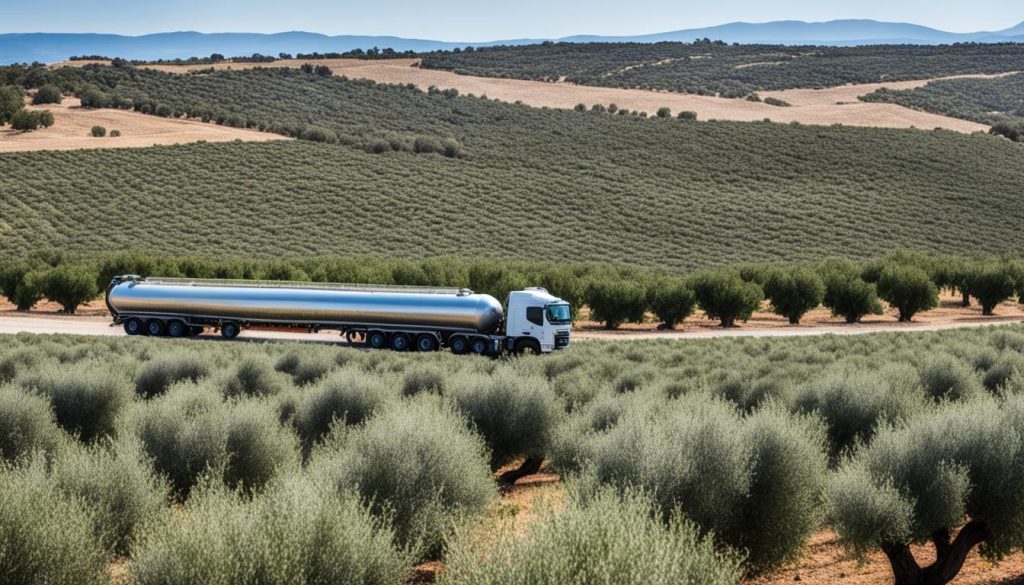
The Global Reach of Spanish Olive Oil Exports
Spain’s olive oil has gone beyond its borders, becoming a global leader. Its olive oil exports have won hearts around the world. They show off the quality and unique tastes that make Spanish olive oil special.
Conquering International Markets with Quality and Flavour
Spanish olive oil brands have made a mark in the world market. They use their rich history and skilled making to stand out. From the sharp taste of Picual to the sweet hints of Arbequina, they’ve found a special place in the market.
- Spanish olive oil exports have been on the rise, showing how much people around the world want these top-quality oils.
- Big markets for Spanish olive oil are in the United States, Italy, France, and Germany. People there love the unique tastes and health perks of these oils.
- Top brands like Aceites del Sur and Castillo de Canena are known worldwide for their top-notch quality and green farming.
Spanish olive oil exports show how well-known Spain is as a top olive oil maker. As tastes change globally, Spanish olive oil’s unique taste and history will keep winning over fans everywhere.
Spanish olive oil industry: Fostering Sustainable Practices
The world is now focusing more on saving the planet. The Spanish olive oil industry is leading the way in sustainable farming. They are changing the way they grow olives to be kinder to the earth.
Embracing Eco-Friendly Olive Farming Techniques
Spanish olive farmers know it’s vital to protect nature. So, they use eco-friendly methods to lessen their impact on the environment. These include:
- Water Conservation: They use smart irrigation and farming ways to use less water in olive groves.
- Integrated Pest Management: They fight pests with natural and biological methods, not harmful chemicals.
- Renewable Energy Sources: They use the sun and wind to power their oil production, cutting down on carbon emissions.
These green practices help the planet and make the olive oil industry in Spain strong for the future. This way, people will still enjoy the great taste and health benefits of olive oil for years to come.
| Sustainable Olive Farming Practices | Benefits |
|---|---|
| Water Conservation | Less water used, saving natural resources |
| Integrated Pest Management | Less use of harmful chemicals, keeping nature in balance |
| Renewable Energy Sources | Less carbon emissions, helping the planet |
By choosing eco-friendly ways, the Spanish olive oil industry protects the environment. It also shows other farms how to be green. This makes Spain a top producer of quality olive oil that cares for the earth.
Renowned Spanish Olive Cultivars and Regions
Explore the world of Spanish olive oil, where each region and olive type tells a unique story. From the bold Arbequina olives of Catalonia to the sweet Picual olives of Jaén, Spain’s olive oil is a celebration of its land.
Walk through Andalusia’s sunny olive groves, where Picual olives are king. They add their special taste of green apple and almonds to the oil. Then, visit Extremadura’s tough lands, where the Cornicabra olive stands out with its unique bitter taste.
Discover the hidden gems of Spain’s north, where Manzanilla olives grow. They bring a light, almost floral touch to the olive oils. This journey shows the amazing variety that makes Spanish olive oil loved worldwide.