
Start a journey through Spain’s olive oil making. Here, old traditions meet new methods to create a special oil. Learn how Spanish olive oil is made, from the groves under the sun to the modern mills that press out the oil.
Discover the history, different lands, and the quality focus that make Spanish olive oil famous worldwide.
This article will show you how simple olives become a sought-after food item. You’ll see the beautiful olive trees in Spain and how they are picked and pressed carefully. You’ll understand the skill behind every bottle of Spanish olive oil.
Explore the Ancient Spanish Olive Groves
Step into the magical world of Spain’s ancient olive groves. Here, the old and new meet in a mix of tastes. These groves, some over a hundred years old, are key to Spain’s famous olive oil. They show us the beauty of the land that has grown this crop for years.
Discover the Picturesque Olive Orchards
Walk through Spain’s hills and valleys, where olive trees grow. Their silver-green leaves and twisted trunks show their strength. These Spanish olive groves are more than just food sources. They are part of the land, shaped by the special terroir that makes the oil unique.
See how careful farming keeps these groves alive. Farmers prune and harvest with great care. This shows the deep respect Spaniards have for their land and its gifts.

Understand the Terroir’s Influence
Spanish olive oil’s greatness comes from skilled farmers and the special terroir. Soil, climate, and microclimate mix to create unique flavours. Each region has its own taste. Learn about these differences to understand why Spanish olive oil is so loved.
Spanish olive oil production: Traditional Harvesting Methods
Olive harvesting in Spain is a tradition that goes back generations. It shows the hard work and skill of Spanish farmers. From the beautiful olive groves to picking the olives by hand, every step is done with great care. This keeps the quality and taste of the oil high.
Spanish olive oil production is known for its manual harvesting. Many farmers still pick olives by hand, not using machines. This careful picking makes sure the olives are not damaged. This keeps the oil’s smell and taste perfect.
- Olives are carefully selected and picked by hand, often using traditional tools and techniques passed down through generations.
- The harvesting process is typically carried out during the autumn months, when the olives reach their peak ripeness and flavour.
- Spanish farmers take great pride in the traditional olive oil production methods, ensuring that every step of the process is performed with the utmost attention to detail.
Spanish olive oil is special because of its careful production. Using old methods, producers make sure each bottle tastes like Spain’s rich farming history.
| Traditional Olive Oil Production Methods | Mechanised Olive Oil Production |
|---|---|
| Hand-picking of olives | Mechanical harvesting |
| Slow, careful processing to preserve flavour | Faster, higher-volume processing |
| Lower yields but higher quality | Higher yields but potentially lower quality |
| Longer, more labour-intensive process | Quicker, more efficient process |
Spanish farmers stick to traditional methods to make a unique and high-quality oil. This oil shows the special taste of their region. It’s why Spanish olive oil is loved in kitchens all over the world.
Behind the Scenes: Olive Oil Mills in Spain
Step into the world of Spanish olive oil production. See how traditional olive oil mills have been key for centuries. They use ancient techniques to make olive oil special and of high quality.
Witness the Pressing Process
The pressing process is at the heart of Spanish olive oil mills. It turns fresh olives into the golden oil we love. Let’s look at how this magic happens.
- Receiving the Harvest: Olives come from the groves, carrying the scent of their home.
- Cleaning and Sorting: Olives are cleaned and sorted to pick the best, ripe ones.
- Milling and Crushing: Olives are milled and crushed to get their oils without losing taste.
- Pressing: The olives are pressed carefully to get the oil, keeping its delicate taste.
- Decantation and Filtration: The oil is cleaned and filtered to make it clear and pure.
Skilled artisans watch over each step. They make sure the Spanish olive oil you drink is full of the land’s essence and old traditions.
| Traditional Olive Oil Production Methods | Modern Olive Oil Production Methods |
|---|---|
| Slow, meticulous pressing using stone mills and hydraulic presses | Efficient, high-speed centrifugal extraction |
| Minimal processing to preserve the oil’s natural flavours and aromas | More processing to increase yield and extend shelf life |
| Focus on quality over quantity | Emphasis on efficiency and increased production |
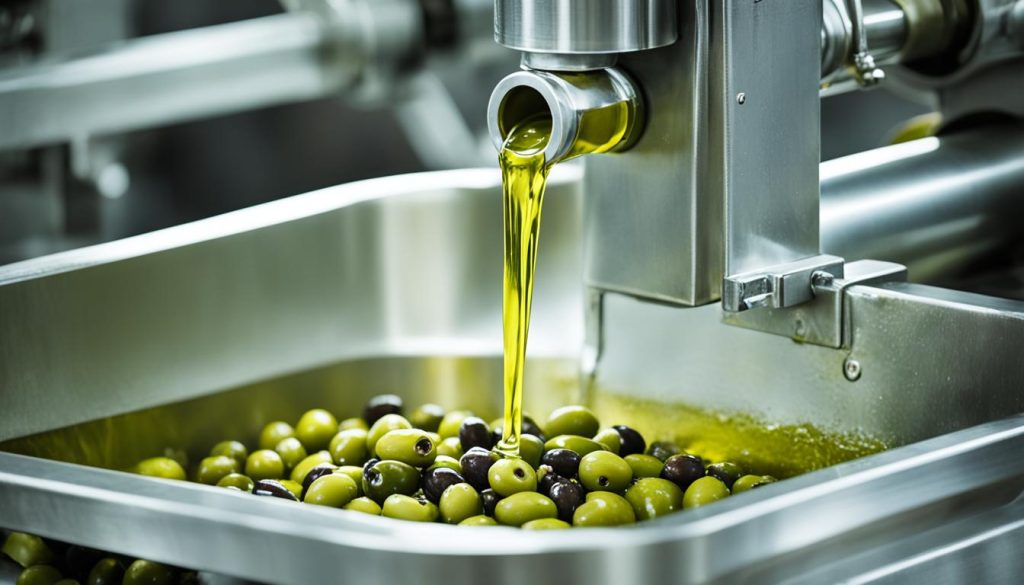
Enjoying Spanish olive oil’s rich taste? Think of the artisans who have passed down these traditional methods. They make sure each bottle shows the land and its long history.
Ensuring Quality: Spain’s Olive Oil Standards
When it comes to olive oil quality standards in Spain, you can trust that only the best products reach your table. The Spanish government has set strict rules to protect their famous Spanish olive oil varieties.
The Protected Designation of Origin (PDO) and Protected Geographical Indication (PGI) schemes are key. They make sure the olive oil you buy is genuine to its region. Each type has its own unique taste and traits.
But there’s more to quality control. Spanish olive oil exports go through tough tests to meet global standards. They check everything from acidity levels to how it smells and tastes. This ensures the oil is pure and real.
- Regular checks on oxidation levels
- Detailed analysis of fatty acid composition
- Strict monitoring of colour, aroma, and taste
Spain is a world leader in making top-notch olive oil thanks to these high standards. From the olive groves to the mills, every step is done with care. This way, you get the real taste of Spanish food culture.
Conclusion: From Grove to Bottle, a Taste of Spain
The journey of Spanish olive oil is filled with tradition and skill. From the groves under the Spanish sun to the careful pressing and bottling, each step shows respect for quality and the environment. This makes a truly special olive oil that brings Spain to your taste buds.
Spanish olive oil producers work hard to make sure their oil is top quality. They use traditional ways of harvesting and modern mills. This shows their dedication to keeping the unique taste and quality of Spanish olive oil.
When you taste the rich, fruity taste and smooth finish of Spanish olive oil, you’re not just enjoying a food. You’re connecting with the land, the people, and the long history of this special oil. So, let’s toast to the producers who keep telling the story of Spanish olive oil, harvest by harvest.